The Individual and Nature
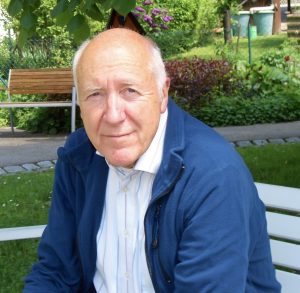
A thought from Julius Korsus (My grandson
I believe that everyone reading this text has entered a forest at some point in their life. At least, let’s assume that’s the case.
Every individual has probably noticed that forests and nature in general have a special effect on us. The smell, the gentle breeze, the rustling of the leaves, the chirping of the birds. All our senses are directly activated and stimulated in the forest. Most people will also have noticed that they feel more relaxed and at ease, and studies have already proven that spending time in a forest reduces cortisol levels in the body. It is no coincidence that the forest has such an effect on us. The reason is that the forest and nature are not foreign places to us humans. It is the place where we have spent 99.3% of our existence. Not in cities, offices, or in front of screens. Nature is our home, and the modern world is historically an exception.
Don’t worry, I’m not one of those people who would now talk about how everything used to be better than it is today, because that’s simply not true. Not everything was better. And after all, there are reasons why we created this modern world. Because if there’s one thing that’s important to the individual, it’s survival, and in the simplest way possible. That’s in our genes. Prehistoric humans maximized comfort as best they could, because there was hardly any comfort back then. Life was hard and difficult, and when there were opportunities to make life easier, they took advantage of them. It started with people breeding animals instead of hunting, or building huts to be better protected and survive more easily. And that makes perfect sense.
Even back then, humans damaged nature and generally had a negative impact. They also cut down forests and decimated animal species. However, they did so on a much smaller scale than today. Every life form influences the surrounding nature in some way; that is only natural. Nature is a huge system in which everything influences everything else, both positively and negatively.
But since the Industrial Revolution, this has spiraled out of control, and now we have reached a point where our lives have been made extremely easy. People sit on the sofa all day, watch TV, use their cars for everything, and now we have even reached the point where people use devices that do even the simplest household chores. We use progress as an excuse to justify a world in which we spend more and more of our time sitting around instead of actively enjoying life.
Humans have distanced themselves from nature through their comfort, and the point here is not how humans suffer as a result, but what massive impact this has on nature. We humans have forgotten that nature is our home. Western industrial society, humanity, and especially large corporations see nature as nothing more than a resource.
While prehistoric humans only took what they needed, viewed nature as sacred, and lived in harmony with it, its significance for many today is only a shadow of what it should be. What nature once meant to us has been forgotten, and even individuals who call themselves nature lovers today really only mean that they go for a walk in the woods once a week. Individuals realize that nature is good for them, but they don’t question why that might be. We humans live as we please and destroy anyway through our desire for comfort.
At the top of our society, we also have individuals who call themselves „politicians.“ Some would describe these individuals as the cream of society or the elite, but they are not. They are just old men in suits who spend years discussing the smallest decisions, and like the general public, they are blind to the importance of nature and its destruction. They set climate targets that are impossible to meet and, moreover, have little effect. Slowly, they are beginning to understand that nature is somehow important after all, but they lack the foresight to see how serious the situation really is. Politics works slowly, even though climate change is fast.
And the worst is yet to come. Although scientists have been warning for decades about how bad the situation is due to climate change and the destruction of nature, these politicians are still trying to please company bosses and industrial society by setting their climate targets. Of course, we have to make sure that society doesn’t collapse completely, but it’s still foolish to believe that we can save nature without giving up some of the comforts that led to this situation in the first place.
In our modern Western democracies, politics is also largely determined by the voters. Our democracy is a wonderful achievement that has eliminated many of the problems of past centuries. Unfortunately, however, it is slow, and when it comes to issues such as climate change, where time is running out, swift action is required. In addition, when it comes to extremely complex issues, we cannot rely on millions of individuals, some of whom have only basic knowledge, to make the decisions. What I mean is that perhaps we should also let people who are very well informed about these issues and who devote their entire lives to them have a say. By that, I mean scientists, of course.
An ordinary individual (the average person) chooses what sounds best for their own problems and concerns. And unfortunately, that doesn’t save the world.
I don’t want to appear anti-democratic here, because democracy is not our enemy, but it is a system that needs to be used differently in relation to the climate crisis.
But what now?
The hard truth is that, with the current course, neither nature nor the individual is safe. It is impossible to say exactly what the future will bring, but it can be assumed that the world as we know it today will change—in a way that is not good for us. So saving nature is actually in the interest of the individual. We are faced with the choice of adapting and saving what can be saved, or watching as an unpleasant future unfolds. A future in which comfort is no longer possible in any way and the world is more hostile to us than our own homes.
How?
The world is already far too damaged to be saved now. Much has already been lost. Coral bleaching, for example, has already reached a point where it is irreversible. And the same applies to many other things. But nature has already survived a lot, and we can help it. And if you think I’m about to start with the standard suggestions, you’re wrong.
Mandatory nature education would be the first step. Everyone, regardless of age, needs to know how serious the situation is. Ultimately, it is the masses who enable and implement change, so we must ensure that the masses are informed. Many people are already aware of climate change, but everyone should know how nature works and what is happening to it. It is worrying that children can name more company names than plant species. Schools should teach a direct connection to nature. People protect what they love and live with in their everyday lives.
Another step would be to radically reduce consumption. No more fashion trends, new cell phones every year, and other wasteful practices. Resources are limited, and we should treat them as such: use only what is necessary and make the best use of what we have. This would largely solve the problem of environmental pollution and drastically reduce resource consumption. Industry in general would be much less active and would generate much less CO₂ through manufacturing and transportation.
My third suggestion would be to restructure food consumption. The food industry is extremely harmful to our world and our nature. If we could reduce food waste, we would save a lot. The meat industry alone is extremely harmful to our environment due to CO₂ emissions and deforestation for land. I’m not advocating that everyone should become vegetarian. But everyone is capable of eating fewer animal products. Not giving them up completely, but clearly reducing them. This would greatly reduce factory farming and the resulting CO₂ emissions, as well as deforestation of the rainforest.
These points are far from enough to save the world. There are thousands of things that need to be done, and you could certainly write a whole book about it. But with my three suggestions, I hope I have conveyed an idea of the direction we need to take.
One thing is clear: saving nature and the world is not easy. It requires a radical transformation of our modern lifestyle as we know it, and unfortunately I have to say that we will never succeed if we continue on our current path, and our future will not look good if we continue down this path. But it’s not completely too late. If the masses wake up at some point and everyone realizes how important nature is, then everyone can do their part to create a world in which humans, together with nature, have significantly more time than they do now. And even now, everyone can start raising awareness or making small changes in their own lives.
I hope I have given everyone reading this something to think about. So, the next time you walk through the forest, please remember that you are also part of nature. And contributing to nature also means doing something for yourself.